If you operate a refuse fleet in California, the CARB Advanced Clean Fleets rule has shifted from future compliance to immediate action. The timelines are tighter than most fleet managers expect, and waiting for perfect timing will cost you money and options. Municipalities, private haulers, and drayage operators all face specific deadlines tied to their fleet size and vehicle class. The question is no longer whether you need to transition to zero-emission equipment; it is how fast you can do it without disrupting your routes, your cash flow, or your service commitments.
California’s regulatory environment moves quickly, and CARB’s Advanced Clean Fleets rule reflects the state’s commitment to eliminating diesel refuse trucks on a defined schedule. Your fleet doesn’t operate in isolation. Your competitors, your suppliers, and your municipal customers are all responding to the same rule. The sooner you understand what it requires and what equipment is available right now, the sooner you can position yourself as a compliant, forward-thinking operator. That is where we come in.
What Is the CARB Advanced Clean Fleets Rule?
The CARB Advanced Clean Fleets rule establishes zero-emission transition requirements for heavy-duty vehicle fleets operating in California. It does not just apply to state vehicles; it covers municipalities, private waste haulers, drayage operations, and other sectors. The rule sets fleet-wide emissions targets that decline on a fixed schedule, effectively requiring you to replace or retrofit diesel trucks with zero-emission alternatives by specific deadlines.
The core pressure comes from a declining percentage rule: your fleet average must meet increasingly stringent emissions targets by 2027, 2030, 2033, and beyond. Miss the target, and you face penalties. There is no phase-out extension for “special circumstances.” This is regulatory certainty, which means planning is your only option.
For refuse fleets specifically, the rule recognizes that vehicles earn revenue every day they are not operating. That is why the focus on zero-emission refuse trucks that can perform full routes without charging during your workday is so critical.
Who Needs to Act and When?
The CARB rule divides fleets into priority categories, each with its own timeline pressure. State and local government fleets face the tightest requirements, with aggressive electrification targets beginning in 2027. Private waste haulers and municipal contractors must plan for the same eventual outcome but sometimes with slightly extended timelines depending on fleet size. Drayage operators have separate, accelerated deadlines that apply regardless of overall fleet size.
Your specific compliance date depends on your fleet classification and the size of your operation. Waiting for regulations to clarify or for battery technology to improve is not a waiting strategy; it is a path to noncompliance and fines. Fleet managers who act now have access to current grant funding, established dealer relationships, and proven equipment options. Those who wait will face compressed timelines and exhausted incentive budgets.
What Zero-Emission Refuse Trucks Are Available Right Now?
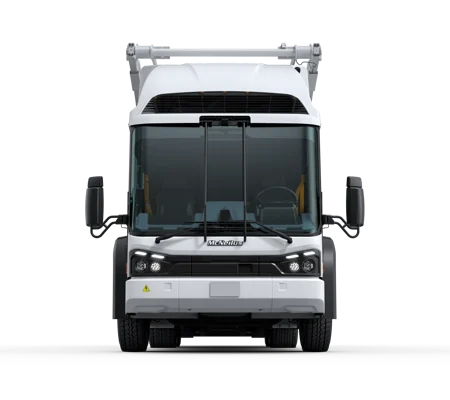
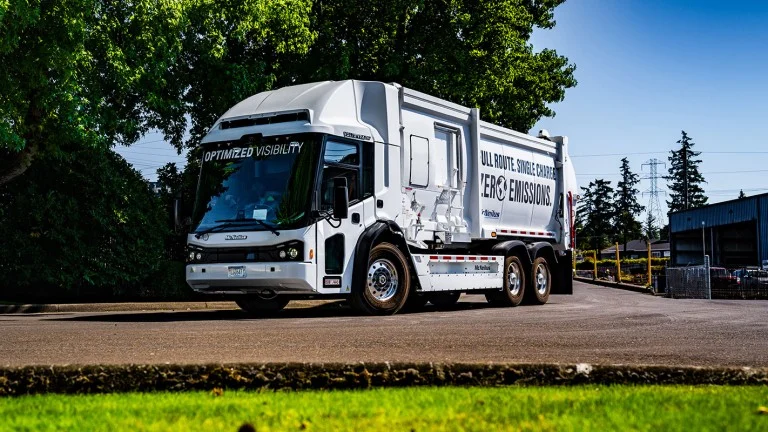
The McNeilus Volterra lineup delivers purpose-built zero-emission refuse trucks designed specifically for the North American refuse market. The Volterra ZSL is an electric automated side loader, identical in capability to diesel-powered side loaders you already operate. The Volterra ZFL is an electric front loader for commercial and municipal applications. Both feature McNeilus engineering, proven hydraulic systems adapted for electric power, and the exclusive electric PTO (power take-off) technology that makes residential and commercial collection possible on a single charge.

This is not a compromise or a workaround. The Volterra is engineered from the ground up for refuse collection. The battery, electric motor, and hydraulic management systems are integrated to deliver the uptime and performance your routes demand. You get the same operational footprint as your current fleet, just with zero tailpipe emissions.
Availability is real today. You do not need to wait for next year or guess at future capability. McNeilus is delivering Volterra trucks now, and Haaker Refuse is your regional dealer and expert for both models.
What About Range, Uptime, and Route Coverage?
Fleet managers ask the same question: can an electric refuse truck complete a full residential or commercial route without stopping to charge? The answer is yes, with proper route planning and the right vehicle. The Volterra ZSL and ZFL are engineered with battery capacity and efficiency designed to cover 100-plus mile routes on a single charge, depending on terrain, collection density, and driving patterns.
Range is real, but it is not infinite. Your current diesel truck probably has a 200-plus mile range; the Volterra achieves its stated range through efficient electric drivetrain engineering and optimized collection cycle management. Your longest routes might require route restructuring or multiple vehicles in a regional depot model. That is not a liability; that is logistics planning that your dispatcher likely already does.
Charging happens overnight or during shift downtime. A properly installed depot charger means your Volterra is ready for the next shift with no reduction in vehicle utilization. Battery performance in California heat is engineered for real-world conditions, not lab conditions. McNeilus has tested Volterra trucks in desert and urban environments across the West.
The transition is manageable when you partner with someone who understands both the equipment and your operational constraints.
Grants and Funding That Can Offset the Cost
California’s clean fleet funding landscape includes multiple grant and incentive programs designed specifically to offset the upfront cost of zero-emission trucks. The Hybrid and Zero-Emission Truck and Bus Voucher Incentive Project (HVIP) provides rebates of up to $120,000 or more per electric refuse truck, depending on vehicle class and powertrain. The Carl Moyer Memorial Air Quality Standards Attainment Program (CMAQ) offers additional funding for fleets in targeted air quality regions. Regional air districts and county programs add supplemental incentives for early adopters.
These funds are available now, but they are not unlimited. Early applicants have access to larger pools of incentive money. Waiting until 2028 or 2029 means competing for depleted grants or facing internal capital shortfalls. Your effective total cost of ownership for a zero-emission refuse truck is substantially lower than the sticker price when combined with current grant availability.
Haaker Refuse tracks current incentive programs and can help you identify which grants your fleet qualifies for and how to layer them for maximum funding impact.
How Haaker Refuse Can Help You Plan Your Transition
Haaker Refuse is the regional expert for CARB-compliant fleet transitions in California and Arizona. We carry the complete McNeilus Volterra lineup. We understand the regulatory landscape and the practical constraints of your operations. We can model your specific transition timeline, calculate your funding eligibility, and coordinate with your existing maintenance and operations workflows.
You do not navigate CARB compliance alone. We work with fleet managers to build a phased replacement plan that spreads capital costs, mitigates operational risk, and aligns with your grant funding calendar. We know which routes work first, how to sequence your transition, and how to maintain full service capability while vehicles are charging and depot infrastructure is being installed.
Frequently Asked Questions
What is the CARB Advanced Clean Fleets rule?
The CARB Advanced Clean Fleets rule sets fleet-wide zero-emission targets for heavy-duty vehicles operating in California. Your fleet average emissions must decline by specific percentages on a fixed schedule. The rule applies to state vehicles, municipal fleets, private waste haulers, drayage operators, and other sectors. Missing compliance targets triggers penalties and potential operational restrictions.
Does the CARB ACF rule apply to private waste haulers?
Yes. Private waste haulers operating in California are subject to the Advanced Clean Fleets rule unless they qualify for specific exemptions. The timelines and targets depend on fleet size, vehicle class, and classification. Most private fleets begin facing measurable compliance pressure in 2027 and beyond.
What electric refuse trucks are available in California?
The McNeilus Volterra ZSL (automated side loader) and Volterra ZFL (front loader) are purpose-built electric refuse trucks available now and deployed across California. Both feature exclusive electric PTO technology and are engineered for full-route performance without mid-shift charging. Other manufacturers are developing zero-emission refuse trucks, but the Volterra lineup is the mature, field-tested option available today.
Are there grants to help pay for electric garbage trucks in California?
Yes. HVIP (Hybrid and Zero-Emission Truck and Bus Voucher Incentive Project) provides rebates up to $120,000 or more per electric refuse truck. The Carl Moyer Program (CMAQ) offers additional funding for air quality regions. Regional air districts add supplemental incentives. Combined grants can offset 30 to 50 percent of the vehicle cost. Funding is available now but finite; early applicants have access to larger pools.
When do I need to comply with CARB Advanced Clean Fleets?
Your specific compliance date depends on your fleet classification and size. State and local government fleets face tighter timelines beginning in 2027. Private waste haulers and contractors have escalating targets through 2033 and beyond. Waiting for extended timelines is not a strategy. Planning now allows you to sequence purchases with grant funding and operational reality.
Haaker Refuse is your partner in fleet compliance and zero-emission transition. We carry McNeilus Volterra trucks, understand California’s regulatory landscape, and help you build a transition strategy that works for your routes, your budget, and your timeline. Nobody works harder for you.