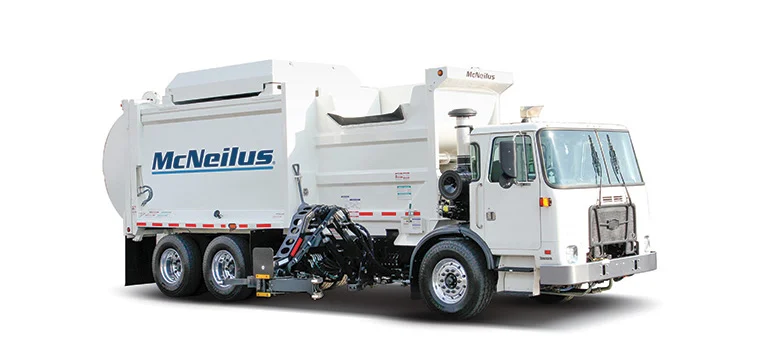
The body does the collecting, but the drivetrain decides whether the truck handles your route comfortably or fights it every day. A refuse truck makes hundreds of starts and stops per shift, climbs whatever grades your routes include, and carries heavy loads to the transfer station. The refuse truck engine and transmission you choose set your fuel use, your durability, and how the truck feels to drive. Spec them to your route and the truck lasts and performs. Spec them by habit and you overpay or underperform. This guide covers how to choose the drivetrain that fits the way you run.
For a refuse truck engine and transmission, match power to your loads and terrain, and choose a transmission built for constant stop-and-go duty. Diesel remains the common choice for range and torque, while CNG and electric drivetrains suit specific routes and emissions rules. Automatic and automated transmissions handle the frequent shifting of collection work better than manuals.
Why the Drivetrain Choice Is Different for Refuse
Refuse duty is brutal on a drivetrain. Unlike a highway truck that cruises, a collection truck starts and stops constantly, idles while the body works, and carries growing weight through the shift. The drivetrain has to be built for that cycle.
Stop-and-Go Is the Defining Stress
Hundreds of starts and stops per shift wear transmissions and brakes far faster than highway miles. The drivetrain has to be rated for this severe duty cycle, not just for the gross weight.
Terrain and Load Set the Power You Need
Flat residential routes need less power than hilly or heavy commercial routes. Under-power a truck on grades and you lose time and strain the drivetrain. Over-power a flat route and you pay for capability you do not use.
Choosing the Engine
Power and Torque for Your Loads
Match horsepower and torque to your heaviest loads and steepest grades. Torque matters most for a refuse truck because it determines how the truck pulls a heavy load away from each stop. Confirm the available ratings with your chassis OEM.
Fuel Type
Diesel offers the most range and torque and the widest service network. CNG can lower fuel cost and emissions where fueling exists. Electric removes tailpipe emissions and suits predictable routes with depot charging. Emissions rules increasingly shape this choice, especially in California. The U.S. EPA outlines heavy-duty engine emissions standards on its vehicle and engine emissions page.
Emissions Compliance
Modern diesels use particulate filters and exhaust treatment to meet standards. In California, plan your engine choice around the state’s clean-fleet direction, which is pushing fleets toward lower and zero-emission options over time.
Choosing the Transmission
Automatic and Automated Beat Manual for Refuse
With hundreds of shifts per shift, an automatic or automated manual transmission reduces driver fatigue and wear compared to a manual. It also smooths the constant starting and stopping that defines collection work. Most refuse fleets spec automatics for this reason.
Rating for Severe Duty
The transmission must be rated for refuse or severe-duty service, not light vocational use. A transmission spec’d for the wrong duty cycle wears out early under stop-and-go collection.

Drivetrain Selection Comparison
| Route profile | Engine emphasis | Transmission |
|---|---|---|
| Flat residential | Moderate power, efficiency | Automatic, severe duty |
| Hilly or heavy commercial | High torque | Automatic, severe duty |
| High daily mileage | Diesel range or CNG | Automated for efficiency |
| California clean-fleet routes | Electric or low-emission path | Matched to drivetrain |
Available engine and transmission options vary by chassis maker, so confirm ratings and combinations against the OEM and McNeilus build data.
Decision Framework: Spec the Drivetrain
- If your routes are hilly or loads are heavy, prioritize torque and confirm the engine pulls your worst-case load.
- If routes are flat and residential, a moderate engine with an efficient automatic keeps cost down.
- If drivers run many stops per shift, choose an automatic or automated transmission to cut fatigue and wear.
- If you operate in California, plan the engine around the state’s clean-fleet timeline.
- If you have CNG fueling or depot charging, weigh alternative fuels for the right routes.
- If you are unsure of available combinations, confirm engine and transmission pairings with the chassis OEM.
Frequently Asked Questions
What engine size does a refuse truck need?
It depends on your loads and terrain. Torque matters more than peak horsepower because it determines how the truck pulls a heavy load away from each stop. Flat residential routes need less power than hilly or heavy commercial routes. Match the rating to your worst-case load and grade, and confirm options with the chassis OEM.
Are automatic transmissions better for refuse trucks?
For most fleets, yes. A refuse truck shifts hundreds of times per shift, and an automatic or automated transmission reduces driver fatigue and drivetrain wear compared to a manual. It also smooths the constant stop-and-go of collection. Spec one rated for severe or refuse duty, not light vocational use.
Should I choose diesel, CNG, or electric?
Diesel offers the most torque, range, and service support. CNG can lower fuel cost and emissions where fueling exists. Electric removes tailpipe emissions and fits predictable routes with depot charging. The right choice depends on your routes, fueling or charging access, and emissions rules, which are tightening fastest in California.
Why does stop-and-go duty matter for the drivetrain?
Constant starting and stopping wears transmissions and brakes far faster than highway cruising. A drivetrain rated only for general vocational use can fail early under refuse duty. Specifying engine and transmission for severe stop-and-go service is what makes a refuse truck durable over years of routes.
How do emissions rules affect engine choice?
They are narrowing the options over time, especially in California, where clean-fleet rules push toward lower and zero-emission trucks. Modern diesels meet current standards with exhaust treatment, but planning your engine choice around the state timeline avoids buying a drivetrain that limits you later. Talk through the timeline with a dealer who knows the rules.
The Bottom Line
The drivetrain is what turns a heavy body into a working truck. Match engine torque to your loads and grades, pick a fuel type that fits your routes and rules, and spec an automatic transmission rated for severe duty. Get the drivetrain right and the truck handles every route without strain or wasted cost.
Why Spec Your Drivetrain With Haaker Refuse Equipment
Haaker Refuse Equipment is the authorized McNeilus refuse and recycling truck dealer for California & Arizona, backed by Haaker Equipment Company’s decades in municipal equipment, six service locations, factory-trained technicians, and a full parts inventory. We help fleets match engine power and transmission to real routes and loads, across diesel, CNG, and electric options, and we know how California’s emissions rules shape the choice.
Let’s spec a drivetrain for your routes. Call Los Angeles at 909-598-2706, San Diego at 619-569-1946, the Central Valley at 559-220-8897, Colton at 909-370-2100, Northern California at 510-514-0043, or Phoenix at 602-266-8214. You can also request a quote or contact us here.