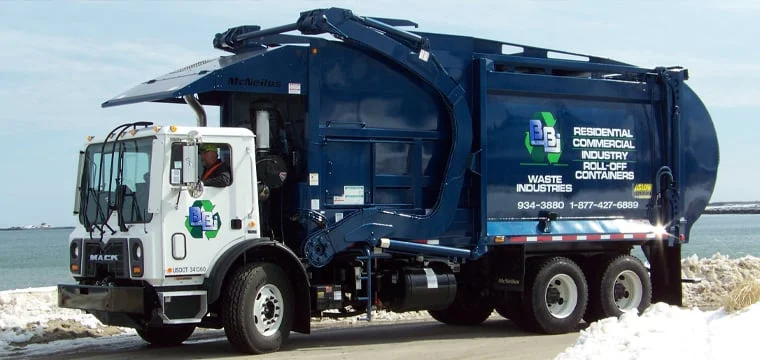
A refuse truck that breaks down on route does not just cost a repair bill. It costs a missed street, an overtime shift, and a scramble to cover the work. Most of those failures are preventable. A refuse truck preventive maintenance program catches wear before it becomes a breakdown, and it does it on a schedule instead of by luck. The fleets that run the most reliable trucks are not lucky, they are disciplined. This guide shows you how to build a preventive maintenance schedule that keeps your trucks on route and your repair costs predictable.
A refuse truck preventive maintenance schedule combines daily driver checks, weekly inspections, and interval-based service tied to engine hours and mileage. It covers the chassis, the hydraulic packing system, brakes, tires, and fluids. Following a set schedule prevents most on-route breakdowns and extends the life of the body and drivetrain, which is the cheapest way to lower fleet cost.
Why Preventive Maintenance Matters More on Refuse Trucks
Refuse trucks work harder than almost any commercial vehicle. Constant stop-and-go driving, heavy loads, and a hydraulic body that cycles hundreds of times a day all add up to fast wear. Skipping maintenance does not save money, it defers a small cost into a large one.
Downtime Is the Real Cost
When a truck is in the shop, a route goes uncovered. That means a rental, overtime, or a missed pickup. Preventive maintenance trades a planned hour in the shop for an unplanned day off the route.
The Body Wears as Fast as the Chassis
The packing system, cylinders, and tailgate take a beating every shift. A PM program has to cover the body, not just the engine and brakes. Federal rules also require systematic inspection and maintenance of commercial vehicles, summarized by the FMCSA in its vehicle inspection and maintenance regulation.
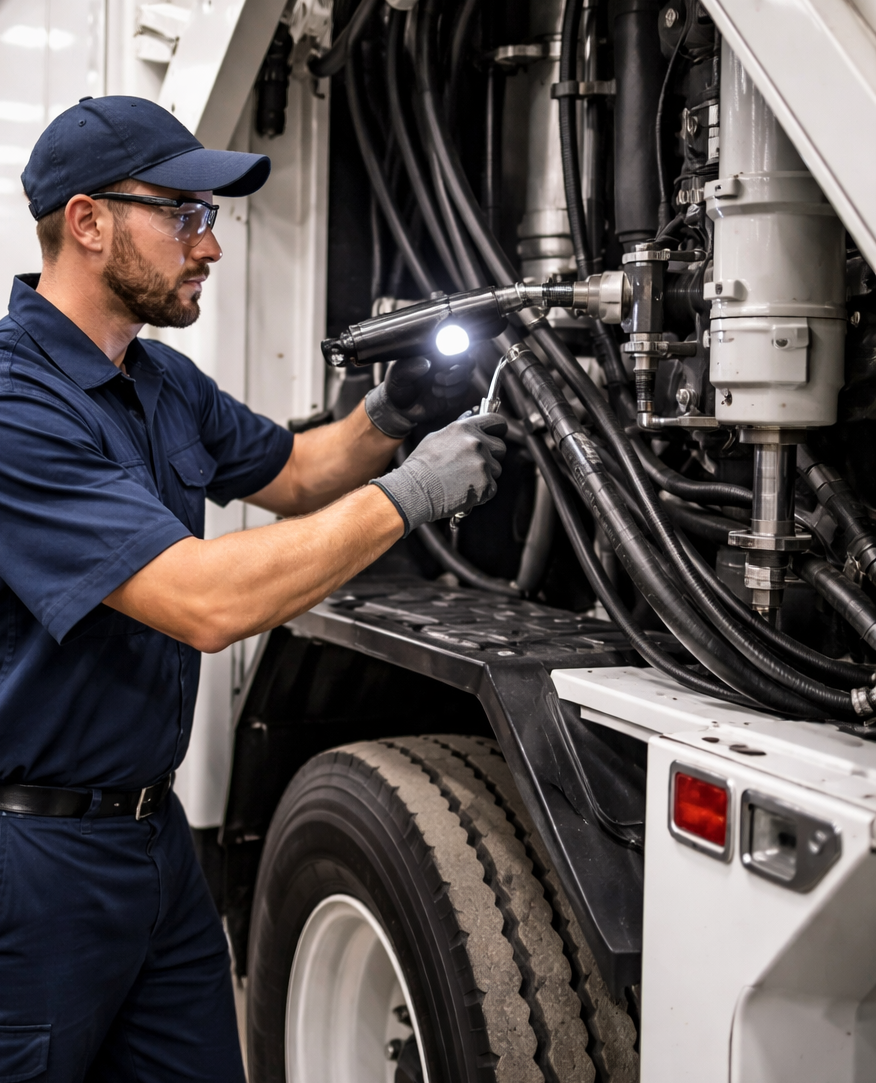
The Four Layers of a PM Schedule
A good schedule is not one checklist. It is layered by how often each task needs to happen.
1. Daily Driver Checks (Pre and Post Trip)
Drivers are your first line of defense. A quick daily walkaround catches the obvious problems before the truck leaves the yard: tires, lights, leaks, fluid levels, mirrors, and the packing cycle. Post-trip, note anything that acted up so it gets addressed before the next shift.
2. Weekly Inspections
Once a week, go deeper than the daily check. Inspect hydraulic hoses and fittings for seepage, grease the body and lift points, check the tailgate seal, and look over brakes and the air system. Weekly attention keeps small leaks from becoming failures.
3. Interval Service (Hours and Mileage)
Tied to engine hours and mileage, this is the scheduled oil and filter service, hydraulic fluid checks, brake inspection, and drivetrain service. Because refuse trucks idle and cycle so much, plan intervals around engine hours, not just odometer miles. Confirm exact intervals against your chassis OEM and the McNeilus body manual.
4. Annual and Major Service
Once a year, do the deep work: full hydraulic system service, structural inspection of the body and frame, cylinder and seal inspection, and any manufacturer-recommended overhauls. This is also when you plan for wear items that are nearing end of life.

Sample Preventive Maintenance Schedule
| Interval | Key tasks | Focus |
|---|---|---|
| Daily | Walkaround, fluids, lights, tires, packing cycle | Catch obvious faults |
| Weekly | Grease points, hose and seal check, brake look-over | Stop small leaks early |
| Interval (hours/miles) | Oil and filters, hydraulic fluid, brake service | Drivetrain and hydraulics |
| Annual | Full hydraulic service, frame and body inspection | Structure and major wear |
Treat the intervals as a framework and set the exact mileage and hour figures from your OEM and body documentation.
Make the Schedule Stick
A schedule only works if it runs every week, not when someone remembers it.
Track It, Do Not Trust Memory
Log every service against each truck. A simple record of hours, mileage, and completed tasks tells you what is due, protects resale value, and proves compliance.
Keep Parts on Hand
A PM step you cannot finish because a filter is on backorder is not preventive. Stocking common wear parts keeps service on schedule. Haaker Refuse keeps a full parts inventory for exactly this reason.
Use Qualified Service for the Hard Parts
Daily and weekly checks belong to your crew. Hydraulic, structural, and major drivetrain work belong with technicians who know refuse bodies. See the Haaker Refuse service department.
Decision Framework: Set Your PM Cadence
- If a truck runs heavy daily routes, shorten interval service and lean on engine hours, not just miles.
- If your crew is stretched thin, keep daily checks short and strict, and outsource interval and annual service.
- If you keep missing PM because parts are out, stock common wear items so service never stalls.
- If you cannot prove what was serviced, start a per-truck maintenance log today.
- If a truck is approaching a major service, plan the downtime rather than waiting for a failure.
Frequently Asked Questions
How often should a refuse truck be serviced?
Use a layered schedule: daily driver checks, weekly inspections, interval service tied to engine hours and mileage, and an annual major service. Because refuse trucks idle and cycle constantly, plan around engine hours rather than odometer miles alone. Confirm the exact intervals with your chassis OEM and the McNeilus body manual.
What gets missed most often in refuse truck maintenance?
The hydraulic packing system. Many programs focus on the engine and brakes and overlook cylinders, hoses, seals, and the tailgate, which wear fast on a body that cycles hundreds of times a day. Build hydraulic and body inspection into the weekly and interval layers so it is never an afterthought.
Why track maintenance if the truck runs fine?
Records tell you what is due, prevent overlooked service, and prove compliance with inspection rules. They also protect resale value, since a documented maintenance history is worth real money at trade-in. A truck that runs fine today is the best time to keep the record current.
Should I do maintenance in-house or use a dealer?
Split it. Daily and weekly checks belong to your drivers and yard crew. Hydraulic, structural, and major drivetrain work belong with technicians trained on refuse bodies. Many fleets handle routine items internally and use a dealer service department for the specialized work.
Does preventive maintenance really lower cost?
Yes. A planned service hour is far cheaper than an unplanned breakdown that takes a truck off route, forces a rental or overtime, and risks a bigger repair. Preventive maintenance turns unpredictable failures into scheduled, budgeted work, which is the most reliable way to lower fleet cost.
The Bottom Line
Reliability is built, not bought. A layered preventive maintenance schedule, daily through annual, keeps your trucks on route and your costs predictable. Cover the body and hydraulics as seriously as the engine, log every service, and keep parts on hand. Do that and breakdowns stop being a surprise.
Why Service Your Fleet With Haaker Refuse Equipment
Haaker Refuse Equipment is the authorized McNeilus refuse and recycling truck dealer for California & Arizona, backed by Haaker Equipment Company’s decades in municipal equipment, six service locations, factory-trained technicians, and a full parts inventory. We help fleets build and run preventive maintenance programs that keep trucks on route, with the parts on hand and the expertise to handle hydraulic and structural work most shops cannot.
Set up a maintenance plan that holds. Call Los Angeles at 909-598-2706, San Diego at 619-569-1946, the Central Valley at 559-220-8897, Colton at 909-370-2100, Northern California at 510-514-0043, or Phoenix at 602-266-8214. You can also explore our service department and parts, or contact us here.