
The automation question isn’t just about technology. It’s about labor cost, route efficiency, and how much your collection program costs per household served. When you’re running a residential refuse operation, the difference between a manual side loader and an automated side loader directly affects your bottom line every single day.
You might think the choice comes down to upfront cost or equipment features. The real decision hinges on how many people you need in the truck, how fast you can complete routes, and whether your operation can sustain the investment through labor savings. We’ll walk you through the actual numbers so you can make the right call for your fleet.
How Manual Side Loaders Work
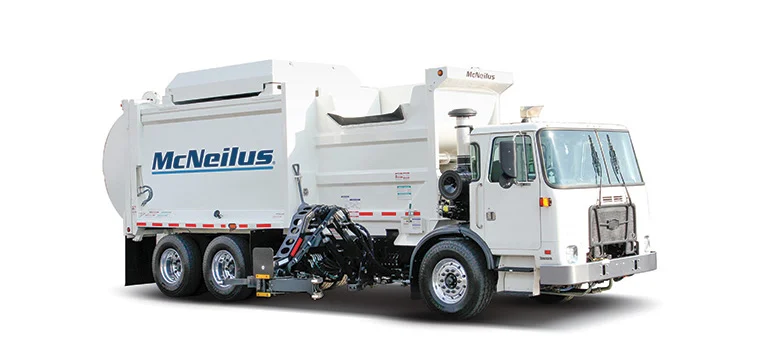
A manual side loader is straightforward. Your driver operates the truck while a side-rider crew member manually handles residential carts from the curb or bin storage area. The side-rider steps on and off the moving vehicle, lifts carts onto the arm, positions them, and signals the driver when the load is seated and ready to lift.
This approach is flexible, requires lower upfront capital, and works well when routes mix different container types or when carts aren’t consistently positioned. Your crew can adapt to obstacles, non-standard equipment, and changing conditions on the fly.
How Automated Side Loaders Work
An automated side loader shifts the entire lifting and positioning operation to the truck itself. Your single operator stays in the cab. The truck’s hydraulic arm extends to the side, positions itself, grabs the cart, lifts it into the hopper, and returns to resting position. All while you drive and focus on route management.
The McNeilus AutoReach is the standard in this category. Its 8-foot arc means it reaches carts without forcing residents to reposition them. The 2,000-pound lift capacity handles residential carts and light bulky items. The arm senses obstacles and dodges around trees, parked cars, and structures so your routes run consistently without manual intervention.
We also offer the Volterra ZSL, the electric automated side loader for fleets targeting zero-emission operations while keeping efficiency gains intact.
The Labor Cost Comparison
Here’s where the real story emerges. This is the operational advantage that makes the investment worthwhile.
A manual side loader requires two full-time employees per truck: one driver and one side-rider. That’s two salaries, two sets of benefits, two workers comp policies. At a conservative loaded labor cost of $70,000 per year per employee, one automated side loader saves approximately $70,000 per year in direct labor per truck.
Scale that across a 10-truck fleet running residential routes. You’re looking at $700,000 in annual labor savings.
Add in workers comp reduction. Side-rider positions carry documented higher injury risk. Stepping on and off a moving vehicle, repetitive lifting, and constant repositioning create liability. An automated system eliminates that exposure almost entirely, lowering your claims rate and insurance costs.
These are illustrative numbers. Your fleet should model costs based on your actual labor rates, workers comp experience, and operational structure. But the math consistently shows that automated side loaders pay for themselves through labor reduction alone.
| Factor | Manual Side Loader | Automated Side Loader |
|---|---|---|
| Operators per truck | 2 (driver + side-rider) | 1 (driver only) |
| Annual labor cost (est.) | ~$140,000 | ~$70,000 |
| Labor savings per truck/yr | Baseline | ~$70,000 |
| Workers comp risk | Higher (side-rider exposure) | Lower |
| Route speed | Moderate | Faster on standardized routes |
| Cart placement dependency | Low | High |
| Upfront cost | Lower | Higher |
| Electric option | No | Yes (Volterra ZSL) |
| Best for | Mixed/flexible routes | Standardized residential routes |
Route Efficiency: What the Numbers Actually Show
Cycle time per collection matters when you’re managing residential density. An automated side loader completes cart lifts faster and more consistently than manual loading on standardized residential routes. No positioning delays, no communication gaps between driver and side-rider, no missed grabs.
But here’s the caveat: ASL efficiency depends on cart placement consistency. When residents place carts perpendicular to the road, positioned clearly, and at standard heights, the arm works at peak speed. When carts are repositioned midway through the lift or placed at irregular angles, the system has to adapt, which slows the cycle.
For well-managed residential cart programs, you see measurable time savings. For mixed operations with inconsistent placement, the efficiency advantage shrinks.
Where Manual Side Loaders Still Make Sense
Manual side loaders are not obsolete. They’re still the right tool when:
- Your routes mix residential carts with bulky items, construction debris, or specialized collection
- Cart standardization is inconsistent or cannot be enforced
- Your operation needs maximum flexibility for unexpected collection types
- Upfront capital constraints are a real limiting factor
- Your service area includes non-cart-based collection that requires crew judgment
If you’re running a hybrid operation, manual side loaders remain valuable. Be honest about your route profile before committing to full automation.
The Upfront Cost vs. Long-Term ROI
An automated side loader costs more upfront than its manual equivalent. That’s a real consideration in fleet budgeting.
But when you model the total cost of ownership, the math becomes clearer. With $60,000 to $70,000-plus in annual labor savings per truck, most operations see full payback within 2 to 4 years. For a fleet running 5 to 10 residential trucks, the numbers are significant. After payback, you’re operating with substantially lower per-route costs for the remaining useful life of the vehicle.
Long-term, an automated fleet costs less to operate than a manual fleet of the same size.
Making the Decision for Your Fleet
Start with an honest assessment of your operation. Evaluate your route consistency. Look at your labor costs and what you’re actually paying in total compensation per employee. Review your injury claims history, especially for side-rider positions. Assess your cart program maturity and whether residents consistently place carts in standard positions.
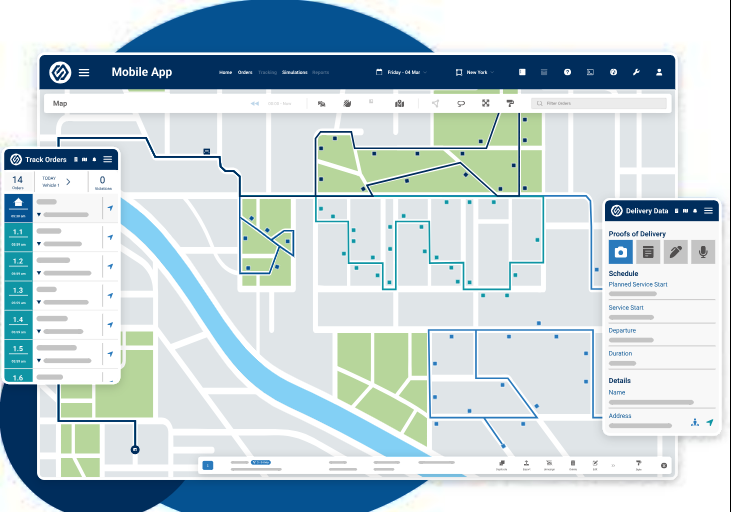
Then model the ROI specifically for your operation. Haaker Refuse can help. We work with fleets across California and Arizona to build custom cost models based on your actual metrics. We’ll show you the payback timeline for your specific situation so you can make a decision grounded in your numbers, not industry averages.
View the McNeilus AutoReach | Talk to Our Team
Frequently Asked Questions
What is an automated side loader garbage truck?
An automated side loader is a refuse truck where a single operator controls a hydraulic arm from the cab to grab, lift, and empty residential carts. The arm extends to the side, positions itself without manual guidance, and lifts carts into the hopper. It eliminates the need for a side-rider crew member.
How much does an automated side loader save on labor costs?
An ASL reduces crew size from two to one per truck. At a loaded labor cost of $70,000 per employee annually, that’s approximately $70,000 in direct labor savings per truck per year, plus additional savings from reduced workers comp claims.
What is the McNeilus AutoReach side loader?
The McNeilus AutoReach is an automated side loader with an 8-foot collection arc and 2,000-pound lift capacity. It reaches carts without forcing residents to reposition them, includes obstacle avoidance sensors, and maintains consistency across residential routes. It’s the leading ASL platform in North America.
Is an automated side loader worth the extra cost?
For standardized residential routes with consistent cart placement and labor costs above $60,000 per employee, yes. Most fleets see payback within 2 to 4 years, then operate with substantially lower per-route costs. Your specific ROI depends on your labor rates, route profile, and operational maturity.
Can an automated side loader handle all residential routes?
ASLs perform best on standardized residential routes with consistent cart placement. They’re less efficient on routes mixing carts with bulky items, non-standard collection types, or inconsistent resident behavior. For hybrid operations, a mix of manual and automated equipment may be optimal.
