Commercial and residential routes look like the same job from the outside, but they ask very different things from a truck. One lifts heavy dumpsters from businesses; the other services hundreds of household carts down tight streets. Spec a truck for the wrong one and you fight it every day, either too big to maneuver or too small to handle the load. Understanding commercial vs residential refuse collection, and how the truck spec should change between them, is the difference between an efficient route and a daily struggle. This guide breaks down what each route needs so you spec the right truck for the work.
Commercial refuse collection moves heavy dumpsters from businesses and favors front loaders with strong frames and tandem axles for high payload. Residential collection services many household carts on tight streets and favors automated side loaders or rear loaders with maneuverable chassis and fast cart lifters. The body type, lifter, chassis, and capacity all change based on whether you serve businesses or homes.
Two Routes, Two Sets of Demands
The container, the stop frequency, and the streets all differ between commercial and residential work. Those differences drive the spec.
Commercial: Heavy Containers, Fewer Stops
Commercial routes service large dumpsters at businesses, apartments, and industrial sites. The containers are heavy, the loads are dense, and the truck needs the muscle to lift and pack them. Stops are fewer but each one moves a lot of weight.
Residential: Light Containers, Many Stops
Residential routes service hundreds of household carts down neighborhood streets, alleys, and cul-de-sacs. The containers are light, but the volume of stops is high and the streets are tight. Speed per stop and maneuverability matter most. The U.S. EPA’s data on waste generation, in its facts and figures on materials and waste, shows how residential and commercial streams differ in makeup.

How the Truck Spec Changes
Body Type
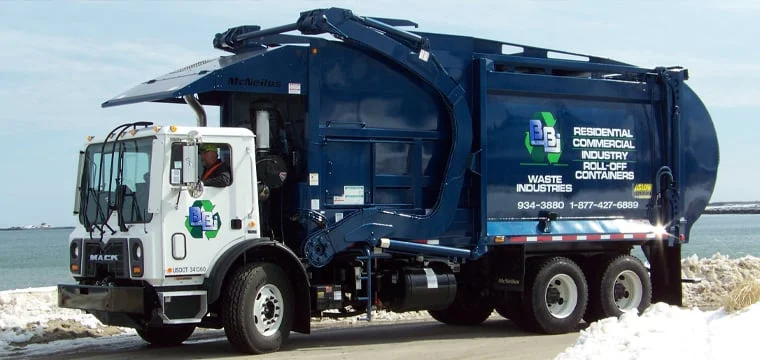
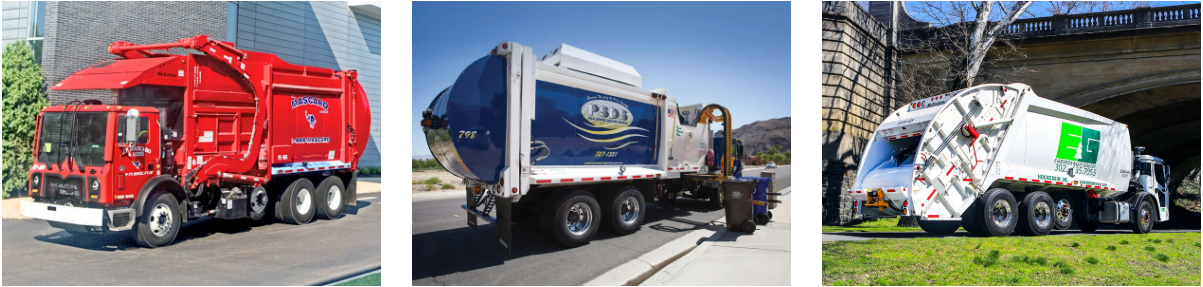
Commercial routes favor front loaders, which lift and empty large dumpsters quickly. Residential routes favor automated side loaders for fast curbside cart collection, or rear loaders for mixed containers. Browse the front loaders and side loaders pages.
Lifter Mechanism
Commercial trucks use fork-style front lifts for dumpsters. Residential trucks use automated cart arms or tippers sized for household carts. The lifter is built around the container you actually service.
Chassis and Maneuverability
Commercial routes can use larger, tandem-axle trucks because stops are fewer and loads are heavy. Residential routes favor tight-turning, often cab-over chassis that handle narrow streets and frequent stops. See the rear loaders page for residential-friendly options.
Capacity and Compaction
Commercial loads are dense, so weight often limits the trip. Residential loads are lighter and bulkier, so high compaction earns its keep by squeezing in more volume. Size capacity to the route’s density and weight limits.

Commercial vs. Residential Spec Comparison
| Spec | Commercial routes | Residential routes |
|---|---|---|
| Body type | Front loader | Automated side loader or rear loader |
| Lifter | Forks for dumpsters | Automated cart arm or tipper |
| Chassis | Larger, tandem axle | Tight-turning, often cab-over |
| Stops | Fewer, heavier | Many, lighter |
| Limiting factor | Weight | Speed and volume |
Container sizes, capacities, and axle limits vary, so confirm the spec against McNeilus data and your local weight limits.
What About Mixed Routes?
Some operations run both, or routes that blend small commercial stops with residential. In those cases, a versatile rear loader or a side loader that can handle some commercial containers may serve better than a specialized truck. The key is to spec for the dominant work and confirm the truck can flex to the rest.
Decision Framework: Spec for the Route
- If you service business dumpsters, choose a front loader with a strong frame and tandem axle.
- If you service household carts on tight streets, choose an automated side loader with a maneuverable chassis.
- If you run mixed containers and alleys, a rear loader handles the widest variety.
- If your commercial loads are dense, spec for weight and watch axle limits.
- If your residential loads are light and bulky, prioritize compaction and cart-collection speed.
- If you run both, spec for the dominant route and confirm the truck can flex to the rest.
Frequently Asked Questions
What is the main difference between commercial and residential refuse trucks?
Commercial trucks are built to lift and pack heavy business dumpsters, favoring front loaders with strong frames and tandem axles. Residential trucks are built to service many light household carts on tight streets, favoring automated side loaders or rear loaders with maneuverable chassis. The container and route drive every spec choice.
Can one truck handle both commercial and residential routes?
Sometimes, with the right truck. A versatile rear loader or a side loader that accepts some commercial containers can flex across mixed routes. But a truck spec’d specifically for one type will outperform a compromise on that work. For mixed operations, spec for the dominant route and confirm the truck can handle the rest.
Why do commercial routes favor front loaders?
Front loaders use forks to lift large dumpsters quickly and pack dense commercial waste, which is exactly what business routes demand. They handle the weight and volume of fewer but heavier stops efficiently. Residential routes, with many light carts, are better served by automated side loaders or rear loaders.
What chassis is best for residential collection?
A tight-turning, often cab-over or low-entry chassis suits residential routes with narrow streets, alleys, cul-de-sacs, and frequent driver entry. Maneuverability and quick stops matter more than maximum payload. Commercial routes, with fewer and heavier stops, can use larger tandem-axle trucks.
Does waste density differ between commercial and residential?
Yes. Commercial waste tends to be denser, so trucks often hit the legal weight limit before the body fills. Residential waste is lighter and bulkier, so volume and compaction matter more. This difference shapes how you size capacity and whether weight or volume is your limiting factor.
The Bottom Line
Commercial and residential collection are different jobs, and the truck should reflect that. Commercial work rewards front loaders with strong frames and high payload; residential work rewards maneuverable side or rear loaders with fast cart collection. Spec the body, lifter, chassis, and capacity to the route you actually run, and the truck works with you instead of against you.
Why Spec Your Route Trucks With Haaker Refuse Equipment
Haaker Refuse Equipment is the authorized McNeilus refuse and recycling truck dealer for California & Arizona, backed by Haaker Equipment Company’s decades in municipal equipment, six service locations, factory-trained technicians, and a full parts inventory. We help fleets spec the right truck for the route, from front loaders for commercial dumpsters to automated side loaders and rear loaders for residential carts, and we back every truck with local parts and service.
Tell us your routes and we’ll spec the right trucks. Call Los Angeles at 909-598-2706, San Diego at 619-569-1946, the Central Valley at 559-220-8897, Colton at 909-370-2100, Northern California at 510-514-0043, or Phoenix at 602-266-8214. You can also request a demo or quote or contact us here.