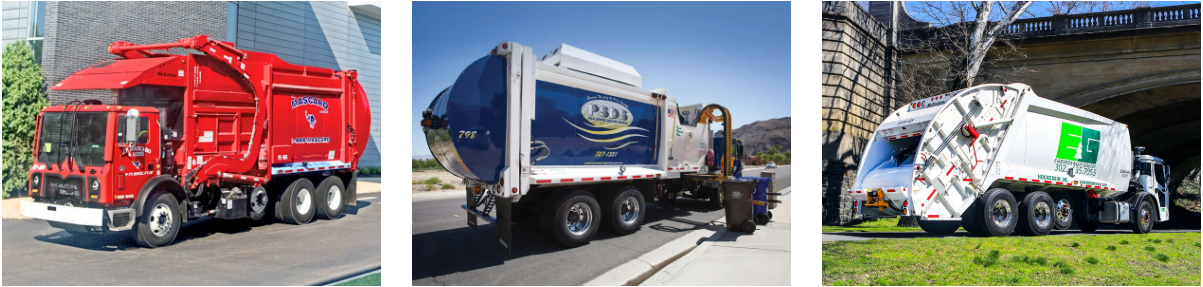
The lifter is the part of the truck that touches every cart, every stop, all day long. Pick the wrong one and you slow the route, frustrate the driver, and wear out the mechanism early. Pick the right one and collection gets faster and safer with less manual handling. The refuse truck cart lifter you choose has to match your carts, your route, and how automated you want to be. This guide breaks down the main lifter types and how to choose the one that fits the way you actually collect.
A refuse truck cart lifter is the arm or mechanism that grabs, lifts, and dumps carts into the body. The main types are automated side-arm grabbers for fully automated routes, semi-automated tippers that the worker rolls carts into, and curotto or front-mounted lifters for automated front loading. The right choice depends on cart size and type, route density, and how much manual handling you want to remove.
Why the Lifter Choice Matters
Two trucks can look identical and perform very differently because of the lifter. The mechanism sets your stops per hour, your worker safety, and which carts you can service.
Speed Per Stop Adds Up
A few seconds saved per cart, multiplied across hundreds of stops, changes how many homes one truck can serve. The lifter is the single biggest factor in cycle speed on a cart route.
Manual Handling Is a Safety and Labor Issue
Every cart a worker lifts by hand is an injury risk and a labor cost. Reducing manual handling protects your crew and helps with the labor shortages that hit waste collection hard. NIOSH documents the injury risks in refuse collection on its waste management worker safety pages.

The Main Lifter Types
Automated Side-Arm Grabber
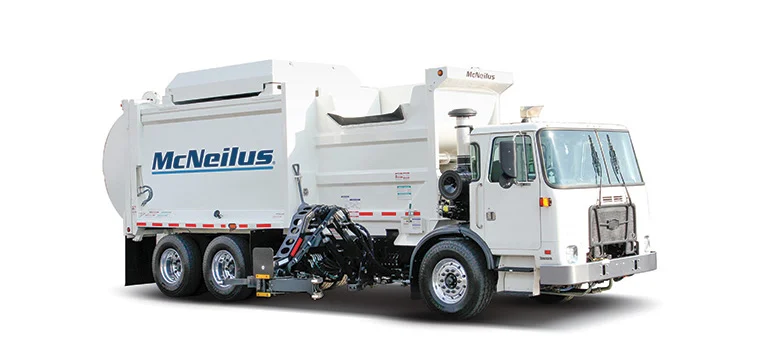
Mounted on an automated side loader, the side-arm grabber extends, grips the cart, lifts, dumps, and returns it, all operated by the driver from the cab. It is the fastest option for high-density residential routes and removes manual handling almost entirely. The tradeoff is that carts must be placed correctly and within the arm’s reach. See the side loaders page.
Semi-Automated Tipper
A tipper is a hydraulic lift the worker rolls a cart into, then the mechanism lifts and dumps it. The worker still moves the cart to the truck, but never lifts the weight. Tippers fit routes with mixed cart sizes, tight access, or where carts are not consistently placed for an automated arm. They cost less than a fully automated arm and handle a wider range of containers.
Front-Mounted Automated Lifter (Curotto-style)
For automated cart collection on a front loader chassis, a front-mounted lifter lets the driver collect carts from the cab with a clear view of the cart. This suits operations that want automated collection but prefer a front loader platform. Pair it with a front loader.
Manual and Cart-Compatible Setups
Some routes still need flexibility for odd containers and bags. Manual and rear-load setups handle the widest variety, at the cost of more handling. Haaker Refuse offers manual and automated side loader options on the Manual Automated Series.

Match the Lifter to Your Carts
The lifter has to fit the carts you actually service. Cart size, in gallons, and the lift standard matter. Most residential carts follow common gripper and tipper standards, but verify compatibility before you commit, since lifter reach and capacity vary by model.
Lifter Comparison
| Lifter type | Best for | Manual handling | Speed |
|---|---|---|---|
| Automated side-arm grabber | Dense, uniform residential routes | Minimal | Fastest |
| Semi-automated tipper | Mixed carts, tight or irregular access | Roll cart only | Moderate |
| Front-mounted automated lifter | Automated collection on a front loader | Minimal | Fast |
| Manual / rear-load | Odd containers, bags, variety | Highest | Slowest |
Capacities, cart compatibility, and cycle times vary by model, so confirm the right lifter against current McNeilus specs for your carts.
Decision Framework: Pick the Right Lifter
- If your route is dense with uniform carts placed at the curb, choose an automated side-arm grabber for maximum speed.
- If carts vary in size or placement is inconsistent, a semi-automated tipper gives you flexibility without manual lifting.
- If you want automation on a front loader platform, choose a front-mounted automated lifter.
- If you service bags and odd containers, keep a manual or rear-load option in the mix.
- If worker injuries or labor cost are a concern, move toward automation to cut manual handling.
- If your carts follow a specific standard, confirm lifter compatibility before buying.
Frequently Asked Questions
What is the difference between a cart tipper and an automated lifter?
A tipper is a semi-automated lift that a worker rolls a cart into, so the mechanism lifts and dumps the weight while the worker still positions the cart. An automated lifter, like a side-arm grabber, extends, grips, lifts, and returns the cart with the driver operating it from the cab. Tippers offer flexibility; automated arms offer speed and the least handling.
Which cart lifter is fastest for residential routes?
An automated side-arm grabber on a side loader is generally the fastest for dense residential routes with uniform carts placed at the curb. The driver never leaves the cab, so cycle time per stop is very low. Its speed depends on consistent cart placement within the arm’s reach.
Can one lifter handle different cart sizes?
It depends on the lifter. Semi-automated tippers handle a wider range of cart sizes and containers, while automated arms are optimized for specific cart standards and reach. If your route mixes cart sizes, confirm the lifter’s compatibility range, or choose a tipper for flexibility.
Do automated lifters reduce worker injuries?
Yes, by removing the repeated manual lifting that drives many refuse collection injuries. Automated arms let the driver service carts from the cab, and tippers lift the weight so workers only roll the cart. Both reduce the strain and lifting that NIOSH identifies as a leading injury source in waste collection.
How do I know if a lifter fits my carts?
Check the lifter’s rated cart sizes and the gripper or tipper standard against the carts you run. Reach, capacity, and compatibility vary by model, so the safest step is to confirm with the manufacturer or dealer before purchase. Matching the lifter to your exact carts prevents missed or dropped containers.
The Bottom Line
The lifter quietly sets your route speed, your safety, and which carts you can serve. Automated side-arm grabbers win on dense uniform routes, tippers win on mixed and tight routes, and front-mounted lifters bring automation to a front loader. Match the mechanism to your carts and your route, and confirm compatibility before you buy.
Why Spec Your Lifter With Haaker Refuse Equipment
Haaker Refuse Equipment is the authorized McNeilus refuse and recycling truck dealer for California & Arizona, backed by Haaker Equipment Company’s decades in municipal equipment, six service locations, factory-trained technicians, and a full parts inventory. We help fleets match the right lifter to their carts and routes, from automated side-arm grabbers to semi-automated tippers, and we keep the parts and service close to keep them running.
Not sure which lifter fits your carts? Call Los Angeles at 909-598-2706, San Diego at 619-569-1946, the Central Valley at 559-220-8897, Colton at 909-370-2100, Northern California at 510-514-0043, or Phoenix at 602-266-8214. You can also request a demo or quote or contact us here.