The price on the quote is the smallest number you will deal with over a refuse truck’s life. Fuel, maintenance, downtime, and parts add up to far more than the purchase price, and they decide whether a truck is a bargain or a money pit. Fleet managers who budget only for the sticker get surprised every year. The ones who plan around refuse truck total cost of ownership make better buying decisions and run more predictable budgets. This guide breaks down every cost that follows a truck home, so you can compare options on the number that actually matters.
Refuse truck total cost of ownership is the full lifetime cost of a truck, not just its purchase price. It includes fuel or energy, maintenance and repairs, parts, tires, insurance, downtime, and the resale value at the end. Fuel and maintenance usually dwarf the purchase price over a truck’s life, so the lowest sticker price is rarely the lowest total cost.
The Five Cost Buckets That Make Up TCO
Total cost of ownership sounds complicated, but it breaks into five buckets you can estimate for any truck you are considering.
1. Acquisition Cost
This is the purchase price, financing or lease cost, and any upfit. It is the number everyone focuses on, and it is usually the smallest piece of the lifetime total. Incentives, especially for electric trucks in California, can lower this bucket significantly.
2. Fuel or Energy
Over years of daily routes, fuel is often the largest single cost. Diesel prices swing with the market, which makes budgeting harder. The U.S. Energy Information Administration tracks current and historical diesel prices on its fuel price data page, which is useful for projecting this bucket. Electricity and CNG can lower energy cost per mile depending on your routes.
3. Maintenance and Repairs
Refuse trucks work hard, so routine service and wear-part replacement are constant. Hydraulics, packer components, brakes, and tires all need attention. A strong preventive maintenance program lowers this bucket by preventing the big failures.
4. Downtime
This is the cost everyone forgets. A truck in the shop is a route uncovered, a rental to arrange, or overtime to pay. Downtime cost is real money even though it never appears on an invoice. Reliable trucks and fast parts access keep this bucket small.
5. Resale or Residual Value
What the truck is worth at the end reduces your net cost. A well-maintained truck from a supported brand holds value better, which is why maintenance records and brand reputation matter to your bottom line.
Why the Cheapest Truck Often Costs the Most
A low purchase price can hide a high total cost. A bargain truck with poor parts support sits in the shop longer. A used body with hidden wear needs expensive repairs. A powertrain mismatched to your routes burns extra fuel every day. The sticker saves you once. The other buckets bill you every month.
Parts Availability Is a Cost Factor
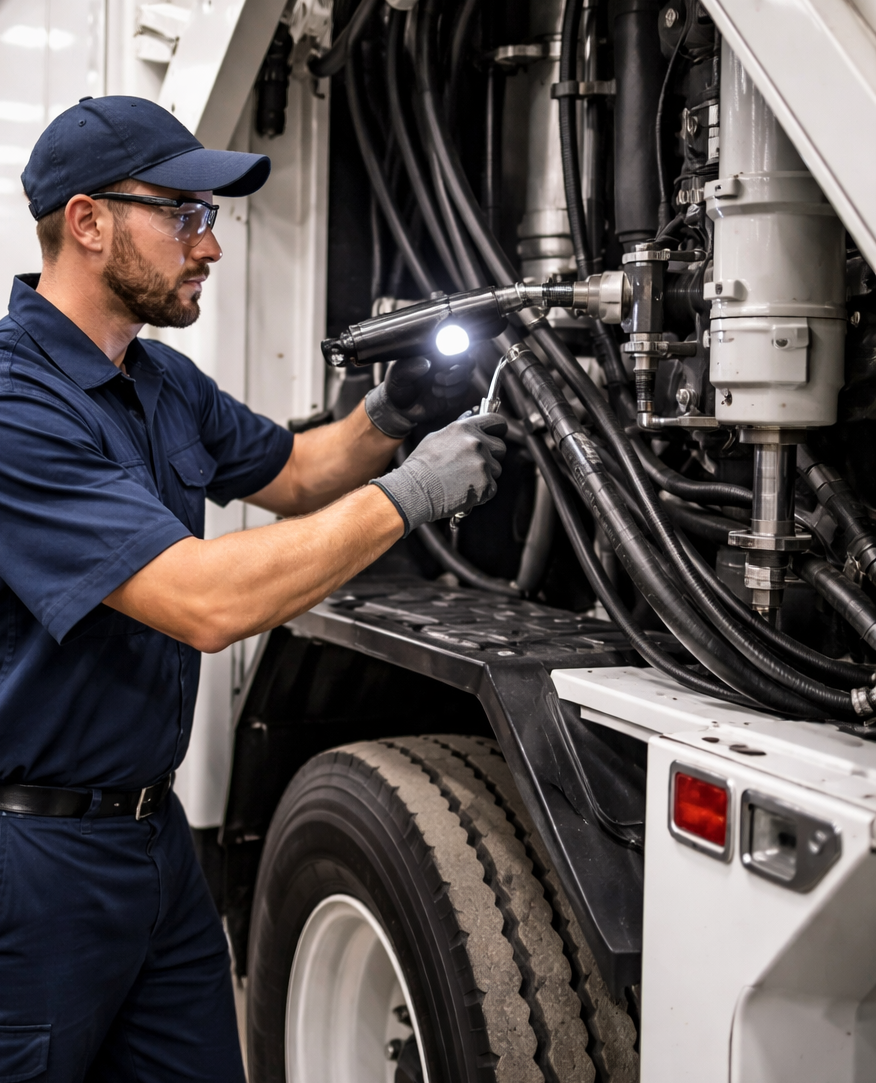
If a part takes weeks to arrive, the truck sits and the downtime bucket grows. Buying from a dealer with a full parts inventory shortens repairs and protects your routes.
Service Access Is a Cost Factor
Local, factory-trained service keeps small problems small. Distance to qualified service adds tow costs and downtime. Haaker Refuse runs six service locations across California and Arizona for exactly this reason. See the service department.
TCO Cost Buckets at a Glance
| Cost bucket | What it includes | How to lower it |
|---|---|---|
| Acquisition | Price, financing, upfit | Incentives, right-sizing the spec |
| Fuel / energy | Diesel, CNG, or electricity | Match powertrain to route |
| Maintenance | Service, hydraulics, wear parts | Preventive maintenance program |
| Downtime | Lost routes, rentals, overtime | Reliable trucks, fast parts |
| Resale | End-of-life value | Records, supported brand |
Decision Framework: Budget for the Whole Life
- If two trucks have different sticker prices, compare fuel and maintenance over the planned life, not just the quotes.
- If a route runs high daily miles, weight your decision toward the lowest fuel or energy cost.
- If downtime hurts your operation badly, pay more for reliability and local parts and service.
- If you operate in California, factor electric incentives into the acquisition bucket before ruling electric out.
- If you plan to resell, keep complete maintenance records and buy a supported brand to protect residual value.
- If your budget is fixed, right-size the spec rather than buying the cheapest truck that does not fit the route.
Frequently Asked Questions
What is total cost of ownership for a refuse truck?
It is the full lifetime cost of owning and operating the truck, not just the purchase price. It includes acquisition, fuel or energy, maintenance and repairs, parts, tires, insurance, downtime, and resale value at the end. Looking at total cost of ownership shows the real expense of a truck, which is usually far higher than the sticker.
Which costs the most over a refuse truck’s life?
Fuel and maintenance typically dominate, often exceeding the purchase price over years of daily routes. Downtime is another large but easily overlooked cost. Because these recurring costs add up, the truck with the lowest purchase price is frequently not the cheapest to own once you total everything.
How does downtime factor into cost of ownership?
Downtime means a route is uncovered, which forces rentals, overtime, or missed service. Those costs are real even though they never show on a repair invoice. Reliable trucks, a strong preventive maintenance program, and fast access to parts and service all reduce downtime and lower your total cost.
Do electric refuse trucks have a lower total cost of ownership?
They can, especially in California where incentives offset the higher purchase price and energy cost per mile is low. Electric drivetrains also need less routine maintenance. Whether they win on total cost depends on your routes, charging access, and the incentives you qualify for, so run the numbers for your operation.
How can I lower the total cost of ownership on my fleet?
Match the truck and powertrain to the route, follow a disciplined preventive maintenance schedule, and buy from a dealer with local service and a full parts inventory to cut downtime. Keep thorough maintenance records to protect resale value. These steps lower the buckets that cost the most over a truck’s life.
The Bottom Line
The purchase price is one number out of five, and usually the smallest. Fuel, maintenance, downtime, and resale decide what a truck really costs. Budget for all of them, match the truck to the route, and buy where parts and service are close. Do that and the truck that looked more expensive on the quote often turns out to be the cheapest to own.
Why Buy and Service Your Fleet With Haaker Refuse Equipment
Haaker Refuse Equipment is the authorized McNeilus refuse and recycling truck dealer for California & Arizona, backed by Haaker Equipment Company’s decades in municipal equipment, six service locations, factory-trained technicians, and a full parts inventory. We help fleets spec trucks for the lowest lifetime cost, then keep them running with local service and fast parts so downtime stays low and resale value stays high. We sell on total cost, not just the sticker.
Want help comparing trucks on total cost of ownership? Call Los Angeles at 909-598-2706, San Diego at 619-569-1946, the Central Valley at 559-220-8897, Colton at 909-370-2100, Northern California at 510-514-0043, or Phoenix at 602-266-8214. You can also request a quote, explore our parts and service, or contact us here.