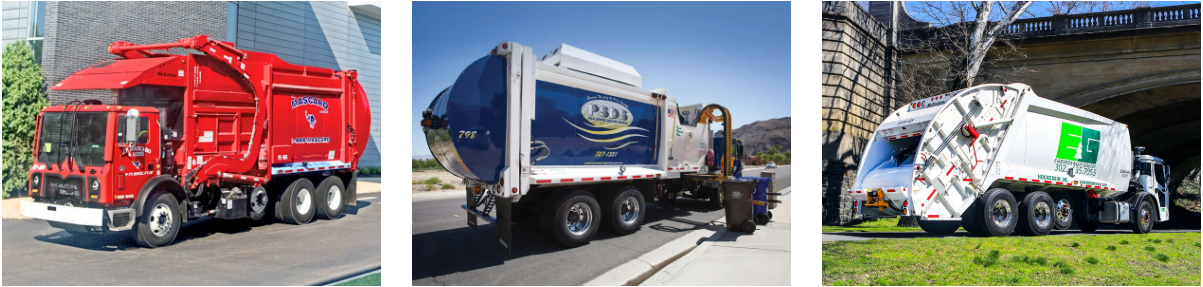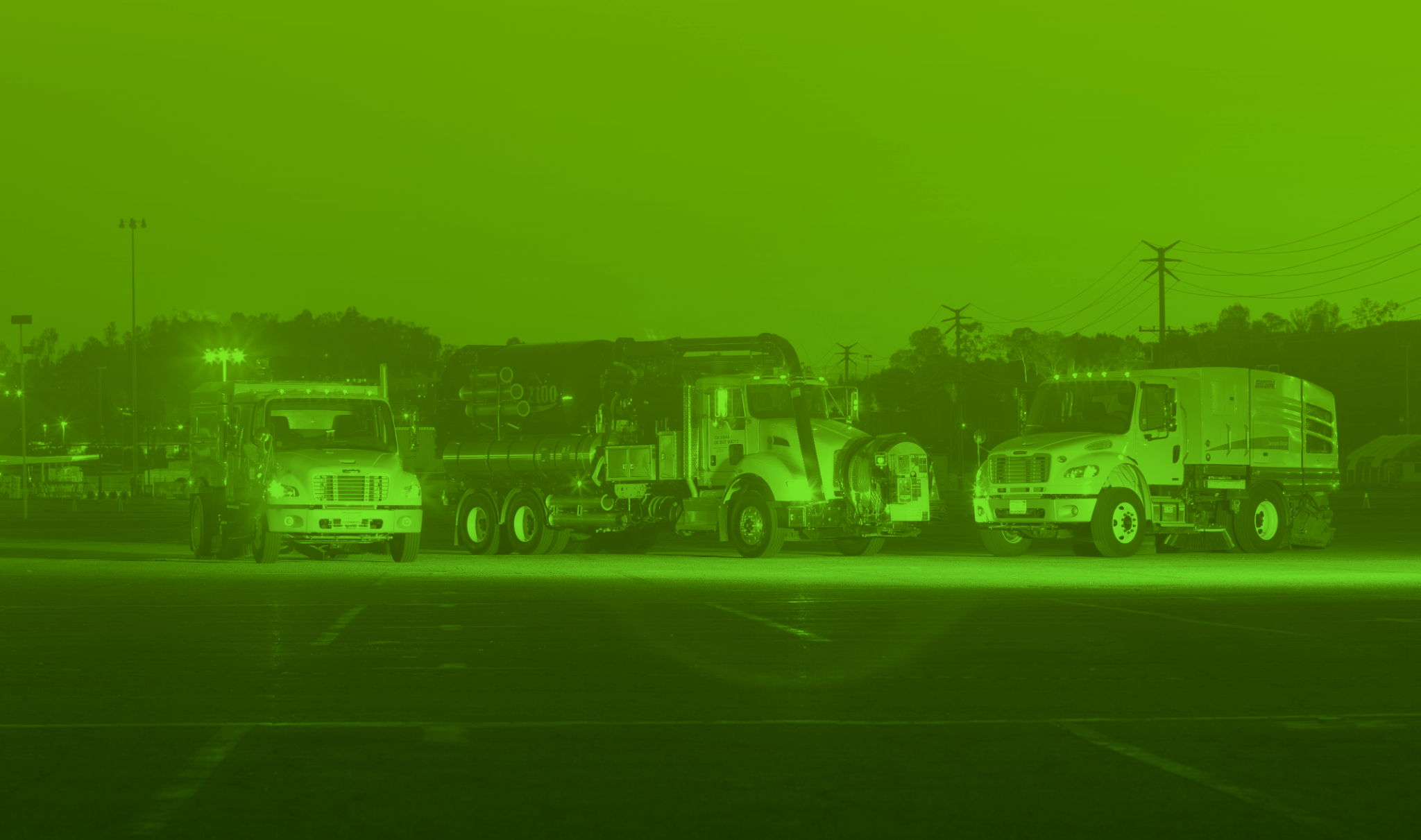
If you collect waste in California, SB 1383 has already changed your job. The state now requires residents and businesses to keep organic waste out of the landfill, and that means haulers have to collect food scraps and yard waste as separate streams. For fleet managers, the question is practical. How do you add an organics route without doubling your trucks and your trips? The answer comes down to how you plan routes and which trucks you run. This guide explains what SB 1383 organics collection requires and which refuse truck setups handle it best.
SB 1383 is California’s law requiring the diversion of organic waste, like food scraps and yard trimmings, away from landfills to cut methane emissions. For haulers it means collecting organics as a separate stream from trash and recycling. Split body trucks that carry two streams in one vehicle, along with dedicated organics routes, are the most efficient way to meet the requirement without adding trips.
What SB 1383 Actually Requires
SB 1383 targets short-lived climate pollutants, and organic waste in landfills is a major source of methane. The law directs jurisdictions to provide organic waste collection to residents and businesses and to hit statewide diversion goals. CalRecycle administers the program and keeps current requirements on its SB 1383 program page.
Separate Streams
The core change is stream separation. Organics cannot ride along with trash. That usually means a third cart at the curb and a collection plan that keeps the organics stream clean from pickup to processing facility.
It Affects Everyone in the Chain
Jurisdictions, haulers, and generators all carry responsibilities. For haulers, that means the equipment and routes to collect organics reliably, plus the ability to keep streams separated during collection.

The Equipment Challenge: Two Streams, Limited Trucks
Adding an organics stream sounds simple until you count trucks and trips. Run a separate truck for organics and you add capital cost, drivers, and fuel. The smarter approach is to collect more in fewer passes.
Split Body Trucks Carry Two Streams at Once
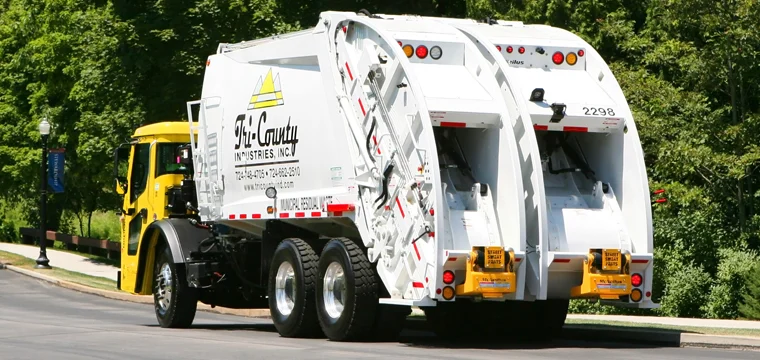
A split body rear loader divides the body into two compartments, so one truck can collect organics and trash, or recycling and trash, on a single pass. That cuts the number of trucks and trips you need to serve the same households. Haaker Refuse offers this as the Split Body Series rear loader.
Dedicated Organics Routes
For high organics volume, a dedicated route with a standard or high-compaction rear loader can make sense. The key is keeping the organics clean and getting it to the right facility. See options on the rear loaders page.
Automated Carts and Side Loaders
Where three-cart residential service is the model, automated side loaders speed curbside collection and reduce manual handling. Browse the side loaders page.

Truck Options for SB 1383 Compliance
| Collection need | Best truck type | Why it fits |
|---|---|---|
| Two streams in one pass | Split body rear loader | Two compartments, fewer trips |
| High-volume organics route | Standard / high-compaction rear loader | Capacity for dense, wet loads |
| Residential three-cart service | Automated side loader | Fast curbside, less manual handling |
| Commercial organics from businesses | Front loader | Handles commercial containers |
| Mixed routes, tight streets | Side loader or compact rear loader | Maneuverable in residential areas |
Body capacities and compartment splits vary, so confirm the right configuration against current McNeilus specs for your volume.
Planning an Organics Program That Pencils Out
The trucks are only part of it. Route design and load planning decide whether organics collection adds cost or stays efficient.
Watch the Weight
Organics are wet and heavy. A compartment that fills by volume can hit weight limits before it looks full, so plan payload around dense loads, not just cubic yards.
Keep the Stream Clean
Contamination is the enemy of an organics program. Split bodies and dedicated routes both help keep food and yard waste separate from trash, which protects the value of the load at the processing facility.
Decision Framework: Match Trucks to Your Organics Plan
- If you want to add organics without adding trucks, choose a split body rear loader to run two streams in one pass.
- If organics volume is high on a route, run a dedicated rear loader sized for dense, wet loads.
- If you serve three-cart residential customers, automated side loaders keep curbside collection fast.
- If you collect organics from restaurants and businesses, front loaders handle the commercial containers.
- If your routes are tight and mixed, a maneuverable side loader or compact rear loader keeps you efficient.
- If contamination is a concern, favor split bodies or dedicated routes to protect the organics stream.
Frequently Asked Questions
What is SB 1383 in simple terms?
SB 1383 is a California law that requires keeping organic waste, such as food scraps and yard trimmings, out of landfills to reduce methane emissions. It directs jurisdictions to provide organics collection and meet diversion targets. For haulers, it means collecting organics as a separate stream from trash and recycling.
Do I need a special truck for organics collection?
Not always, but the right truck makes it far more efficient. A split body rear loader can collect organics and trash in one pass, which avoids adding a whole separate route. For high-volume organics, a dedicated rear loader works well. The best choice depends on your route density and volume.
How does a split body truck help with SB 1383?
A split body divides the collection body into two compartments, so a single truck carries two separated streams at once. That lets you add organics or recycling collection without doubling trucks and trips. It is one of the most cost-effective ways for haulers to meet stream-separation requirements.
Why are organics loads harder on trucks?
Organic waste is wet and dense, so a body can reach its legal weight limit before it looks full. That means you have to plan payload around weight, not just volume, and choose a chassis and body rated for heavy loads. Spec the truck with dense organics in mind to avoid running under capacity or overweight.
Does SB 1383 apply outside California?
SB 1383 is California law, so it applies to California jurisdictions and haulers. Arizona and Nevada do not have the same statewide mandate, though organics and recycling programs exist in many areas for other reasons. If you operate across states, plan your fleet around the strictest rules you face, which in this case are California’s.
The Bottom Line
SB 1383 is not going away, and the haulers who handle it best are the ones who collect more streams in fewer trips. Split body trucks, smart route design, and the right mix of rear and side loaders let you meet the requirement without blowing up your budget. Plan around weight, keep the organics stream clean, and spec trucks to your real volume.
Why Plan Your Organics Fleet With Haaker Refuse Equipment
Haaker Refuse Equipment is the authorized McNeilus refuse and recycling truck dealer for California & Arizona, backed by Haaker Equipment Company’s decades in municipal equipment, six service locations, factory-trained technicians, and a full parts inventory. We help California haulers build SB 1383-ready fleets with split body rear loaders, automated side loaders, and front loaders matched to organics and recycling routes. We know the California rules and we spec trucks that keep streams separated and routes efficient.
Build an organics fleet that pencils out. Call Los Angeles at 909-598-2706, San Diego at 619-569-1946, the Central Valley at 559-220-8897, Colton at 909-370-2100, Northern California at 510-514-0043, or Phoenix at 602-266-8214. You can also request a demo or quote or contact us here.